How to Protect and Store Pokémon Cards
Sleeves, toploaders, binders, boxes, and the Israeli climate - how to protect collectible cards without buying gear you do not need.
Updated 23 July 2026
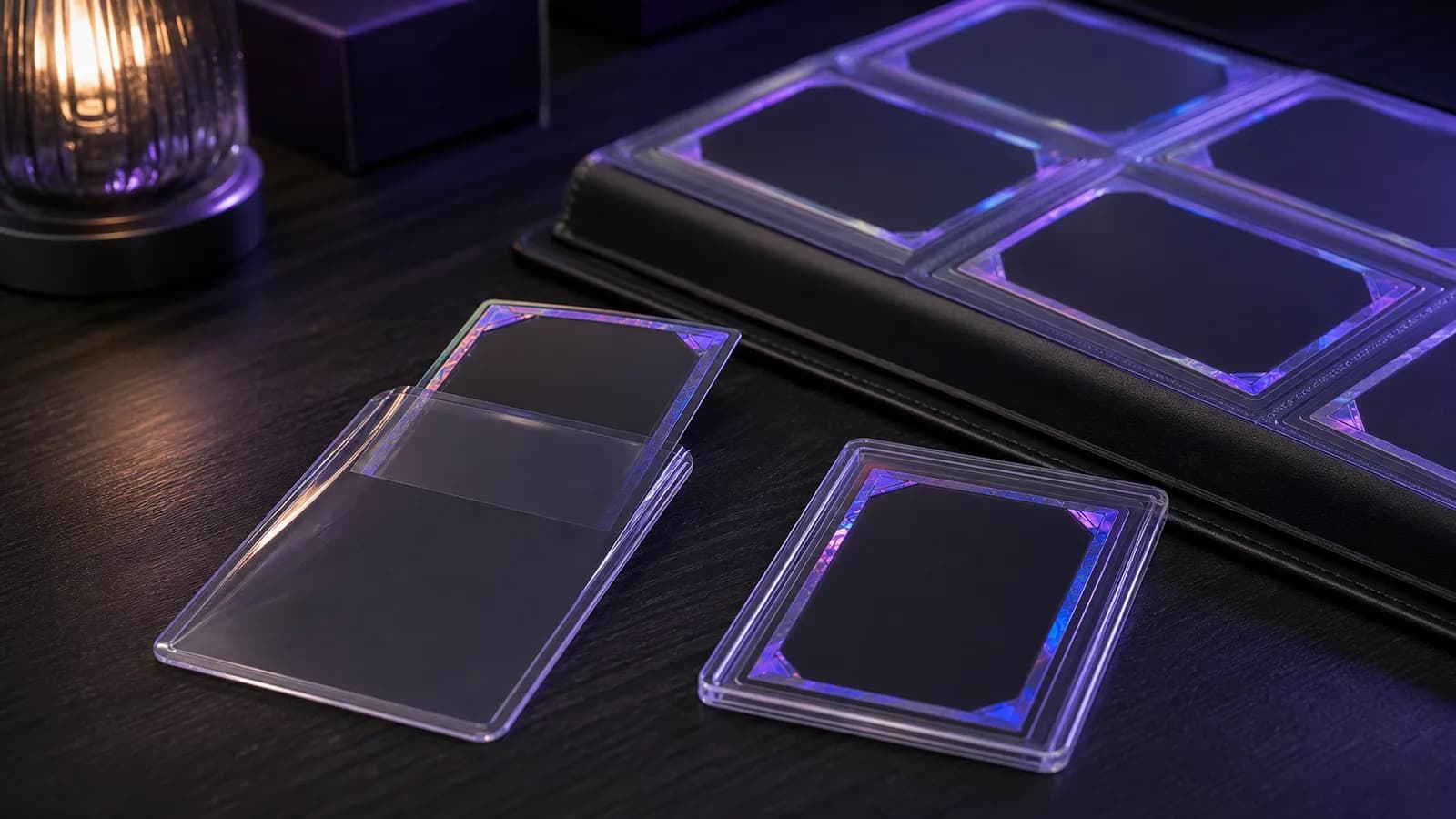
To protect Pokémon cards properly, use double protection: sleeves plus a toploader for valuable cards, and a side-loading binder for the rest of the collection. Keep cards away from sunlight, moisture, and extreme heat. A badly stored card can lose most of its value fast, even if it is rare.
The basic rule is simple: soft protection for scratches, rigid protection for bending, and stable storage against local climate. You do not need to turn your home into a lab. You do need to stop leaving cards in piles, cars, pockets, wallets, or old ring binders.
Why card condition is money
In the trading-card market, condition is not a minor detail. The difference between Near Mint and Played can be 2-4x in price, sometimes more for a desirable holo or older card. A small holo scratch, white corner, or light crease can drop an offer immediately.
This matters even more if you plan to sell, trade, or submit for grading. Grading companies look at corners, edges, surface, centering, and scratches, and a scratched holo can drop grades instantly. To see how condition turns into price, read the full condition scale and our card pricing guide.
Protection gear, from cheap to expensive
You do not need the most expensive product in the store. Match the gear to the card value and use case: play, collecting, shipping, display, or grading. Common brands like Ultra Pro and BCW are everywhere, but the category matters more than the logo.
| Item | What it does | Price magnitude | When to use it | Common mistake |
|---|---|---|---|---|
| Penny sleeves | Protect against scratches, dust, and fingerprints | A few shekels to tens of shekels per pack | Almost every card worth keeping | Sliding the card in without guiding the corners gently |
| Perfect fit sleeves | Sit tightly around the card as an inner layer | Tens of shekels per pack | Double sleeving better cards | Pushing too hard and damaging corners |
| Toploaders | Add rigidity against bends and knocks | Tens of shekels per pack | Valuable cards, shipping, short-term display | Putting a raw card in without a sleeve first |
| Semi-rigid - Card Saver | Semi-rigid holder that is easy to ship and inspect | Tens of shekels per pack | Grading submissions - this is what grading companies ask for | Assuming it protects from impact like a rigid toploader |
| Side-loading binder | Keeps cards organized without sliding out | Tens to hundreds of shekels | Medium collections and cards that are not especially expensive | Overfilling pockets or putting 2 cards in one pocket |
| Storage box | Stores bulk and sets upright and organized | Tens of shekels | Large quantities, duplicates, and playable cards | Stacking heavy piles on top of cards |
The double-sleeve method
Double sleeving is for cards you do not want damaged: valuable holos, promos, vintage cards, alternate arts, and cards you may submit for grading. It adds a few seconds per card, but it saves a lot of regret.
- Put the card into a perfect fit sleeve upside down, so the opening of the inner sleeve is at the bottom.
- Put the card with the inner sleeve into a regular sleeve, with the opening of the outer sleeve at the top.
- For a valuable card, put the whole thing into a toploader or Card Saver depending on the use: toploader for rigid storage, Card Saver for grading and shipping.
When is one sleeve enough? Cheap cards, organized bulk, playable cards, or a card you would not mind getting a tiny mark. When is double protection required? When the market value is high enough that a condition difference changes the real price. If you are unsure where that line is, check the market price with our pricing guide, then decide whether the protection is worth the cost.
Binders and boxes
A side-loading binder is better than a top-loading binder because the cards do not slide out when you pick it up or turn a page. That sounds small until a good card falls corner-first onto the floor. If the binder has a zipper, even better for home storage or carrying.
Ring binders are one of the most common mistakes. The rings can mark pages, press cards near the inner edge, and create bends over time. If you use removable pages, choose a system that keeps cards away from the rings and does not overload each page.
For bulk, dedicated cardboard storage boxes do the job well. Store cards upright, like books, not in stacks that put weight on the bottom cards. Separate valuable cards from bulk, and label boxes by set, language, or value tier.
The Israeli climate: moisture, heat, and sun
In Israel, scratches are not the only problem. Summer humidity, especially along the coastal plain, can warp cards and make them feel wavy. Silica gel packs inside storage boxes can help absorb moisture, as long as you replace or dry them according to the maker's instructions.
Direct sunlight can fade holo foil and colors within weeks. Do not leave cards on a table near a window, on an open sunny shelf, or in a car "just for a few hours". A closed cabinet in a room that feels comfortable to you is better than any trick.
Do not store a collection in a storage shed, balcony, hot attic, or utility room with extreme temperatures. Also avoid dripping air conditioners and damp walls. Sharp temperature swings make materials move, and a card is ultimately printed paper with delicate layers.
Graded cards and slabs
A slab physically protects the card, but it is not magic. It does not meaningfully protect against long-term UV exposure, and it does not prevent scratches on the outer plastic. A scratched slab looks worse on display and can hurt buyer confidence, even if the card inside is fine.
Use slab sleeves if you move them often, and store slabs upright in dedicated boxes. Do not stack heavy piles of slabs on top of each other and do not leave them in the sun. For the process, costs, and shipping from Israel, see our grading from Israel guide.
7 mistakes that ruin cards
- Rubber bands around a stack - they leave dents, warping, and pressure marks.
- Handling cards with oily hands - oil and dust stick quickly to holo foil and backs.
- Sticky sleeves or old PVC sleeves - the wrong plastic can cling to the card.
- An exposed card in a pocket or wallet - corners wear down in a day.
- Cleaning with chemicals - water, alcohol, and wipes can damage the ink layer.
- Heavy stacks - bottom cards take pressure and curvature.
- A hot car in summer - trapped heat and moisture are a very bad combination.
Frequently asked questions
What is the difference between a sleeve and a toploader?
A sleeve is a soft plastic pocket that protects against scratches, dust, and fingerprints. A toploader is a rigid holder that protects against bending and impact. For a valuable card, use both: sleeve first, then toploader.
How do you mail a card without damaging it?
Put the card in a sleeve and a semi-rigid holder or toploader, sandwich it between two clean pieces of cardboard, place it in a padded mailer, and use registered mail or a tracked service. Do not mail a valuable card in a plain envelope with no rigid support.
Should cards be stored in a refrigerator?
No. That is a risky myth. A fridge adds moisture, condensation, and odor risk, and moisture is one of the worst enemies of trading cards. A closed cabinet in a dry, air-conditioned room is better.
How much does it cost to protect a full collection?
It depends on the size of the collection and how many valuable cards it contains. Bulk usually only needs sleeves and dedicated boxes in the tens-of-shekels range, while better cards get toploaders or Card Saver holders. You do not need premium gear for every card.
How do you clean a dirty card?
Very gently, and only with a dry microfiber cloth. No water, alcohol, wipes, or cleaning products. If the mark does not come off with a light touch, leaving it alone is safer than causing permanent damage.
Is a regular binder enough for Pokémon cards?
A binder can be enough if it is side-loading, has no metal rings touching the pages, and does not squeeze the cards. A school-style ring binder is a poor choice for good cards.
Do all valuable cards need to be graded?
No. Grading can add protection and value in some cases, but it costs money and time. Many valuable raw cards are perfectly well protected in double sleeves, a Card Saver or toploader, and a proper storage box.