The World's Most Expensive Cards: The 10 Priciest Pokémon Cards Ever Sold (Updated July 2026)
The ten most thoroughly documented record sales, converted to shekels, credibility-checked row by row - plus one card deliberately excluded because it couldn't be verified.
Updated 23 July 2026
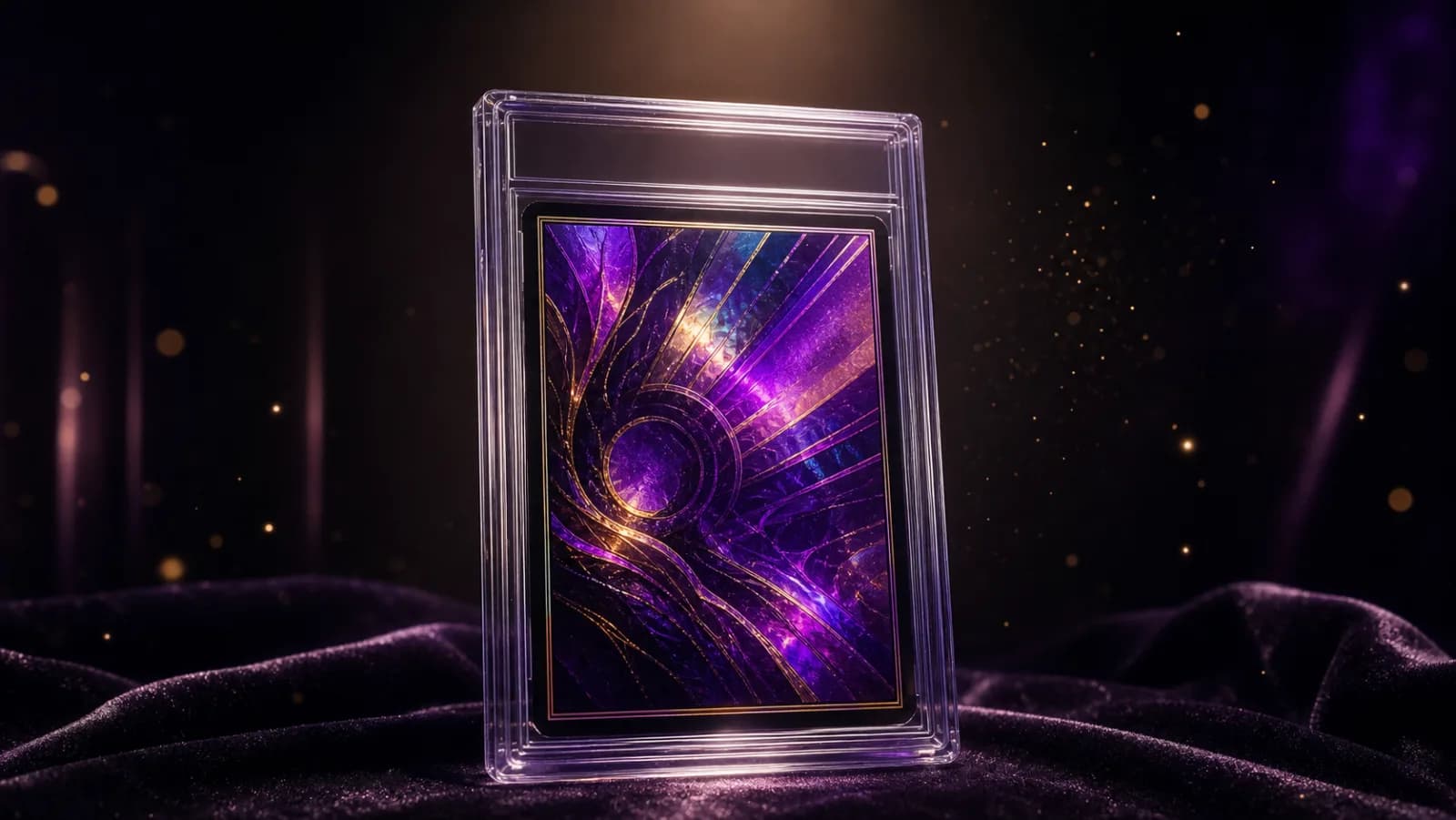
The most expensive card in the world, of any kind, is the Pikachu Illustrator PSA 10, sold in February 2026 for $16,492,000 (roughly ₪63.5 million) at a public Goldin Auctions sale - a record certified by Guinness World Records. It’s a rare 1998 Japanese promo card distributed in only about 39-41 copies as a prize in a CoroCoro magazine illustration contest, and only one copy has ever received a perfect PSA 10 grade.
The 10 most expensive Pokémon cards ever sold
The table below lists the ten most thoroughly documented Pokémon card sales, ranked by price in dollars. Every row was checked against at least two independent verification sources - and where those sources disagreed (mostly on the exact date), the table shows a range and the note explains why. One card reportedly sold for $3,000,000 is not included at all, because no verification was found that the deal actually closed - details further down under "the card that didn’t make the list."
| # | Card | Grade | Price (USD) | Price (₪, approx.) | Date | Venue | Note |
|---|---|---|---|---|---|---|---|
| 1 | Pikachu Illustrator (CoroCoro 1998) | PSA 10 | $16,492,000 | ~₪63.5M | Feb 16, 2026 | Goldin Auctions | Certified by Guinness World Records |
| 2 | Pikachu Illustrator | PSA 10 | $5,275,000 | ~₪20.3M | Jul 22, 2021 | Private sale (Logan Paul, from Marwan "Dubsy") | Surname unverified - only the nickname is confirmed |
| 3 | Trophy Pikachu (bronze, 3rd place, Kamex Mega Battle 1998) | PSA 10 | $1,769,000 | ~₪6.8M | May 18, 2026 | Goldin Auctions | Added after verification - the only one of 5 graded cards above PSA 8 |
| 4 | Charizard "No Rarity," 1st print (#6) | PSA 10 | $1,700,000 | ~₪6.5M | ~Mar 3-5, 2026 (disputed) | Private sale | Venue corrected - not a public Goldin sale |
| 5 | Pikachu Illustrator | PSA 9 | $1,406,250 | ~₪5.4M | Mar 27, 2026 | Heritage Auctions | Confirmed |
| 6 | Pikachu Illustrator | PSA 9 | $1,275,000 | ~₪4.9M | Jul 22, 2021 | Private sale (same bundle deal as #2) | Confirmed |
| 7 | Charizard "No Rarity," PSA slab signed by Mitsuhiro Arita | PSA 10 | $1,232,200 | ~₪4.7M | Mar 8, 2026 | Goldin Auctions ("Goldin 100") | Confirmed - this is the public sale mistakenly attributed to card #4 |
| 8 | No. 1 Trophy Pikachu (gold, 1997 first championship) | PSA 8 | $982,100 | ~₪3.8M | Mar 6, 2026 | Goldin Auctions | Date corrected from Mar 1 (both verification sources agree) |
| 9 | Pikachu Illustrator | PSA 7 | $900,000 | ~₪3.5M | Feb 23, 2022 | Goldin Auctions | Confirmed |
| 10 | Pikachu Illustrator, MBA Gold Diamond | PSA 8.5 | $727,120 | ~₪2.8M | ~March 2026 | Goldin Auctions | Prior figure ($610,000) corrected; exact day unverified |
What makes a Pokémon card this expensive
Two very different paths push a card above a million dollars. The first is a one-time, tiny-run distribution: a promo card produced in the hundreds of copies or fewer, usually given out as a contest prize or event giveaway - a card that never sold in a store. Pikachu Illustrator and Trophy Pikachu are the textbook case: scarcity is built in at the moment of production, almost regardless of grading. The second path is a mass-produced card with a tiny surviving population at a high grade: a card like the Charizard "No Rarity" was printed in the thousands as part of a regular set, but only a handful survive today in condition good enough to earn a PSA 10 - so the real scarcity shows up in the Pop Report (how many copies have ever received the top grade), not in the original print run. That distinction matters: a card with a Pop Report of thousands of PSA 10s (common for modern sets) stays relatively cheap even if it looks "rare" on paper, while a card with a Pop Report of a single copy at that grade can reach enormous value even if thousands of raw copies were printed. The full breakdown of how grading companies assign a score is in our PSA vs. CGC vs. BGS guide, and what even justifies attempting grading in the first place is in our card condition guide.
The Pikachu Illustrator story: the contest card that became a legend
The Pikachu Illustrator never sold in a store. It was awarded as a prize in an illustration contest run by the Japanese manga magazine CoroCoro in 1997-1998, where children were invited to draw Pikachu, and a special card was given to the winners - printed with the word "Illustrator" where a regular Energy card would normally show a trainer’s name, and credited to Pokémon’s official card illustrator, Mitsuhiro Arita, who drew the artwork on the card. The Pokémon Company itself has never published an official count, but collector and auction-house estimates put the print run at 39 to 41 copies - some distributed at an earlier stage of the contest, which is why even the exact number is disputed between sources. Of those few surviving copies, only one has ever received a perfect PSA 10 - and that’s the exact copy that sold in February 2026 for $16,492,000, a record Guinness World Records officially certified as the most expensive trading card in the world, of any game, not just Pokémon.
How the Charizard "No Rarity" broke the million-dollar barrier
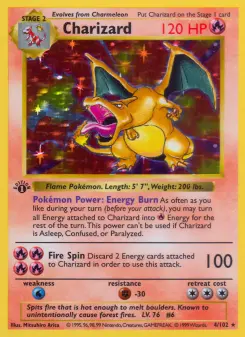
Unlike the Illustrator, the Charizard "No Rarity" (#6, 1st print) isn’t a rare promo card - it’s a printing variant of the classic base-set Charizard in which the rarity symbol that’s supposed to appear in the bottom corner is missing due to a printing error. March 2026 produced two sales worth carefully separating: one copy sold in a privatedeal (not a public auction) for $1,700,000, around March 3-5, 2026 - the exact date is disputed between verification sources. A second copy - a PSA 10 slab genuinely signed by Mitsuhiro Arita himself - sold at Goldin Auctions’ public "Goldin 100" sale on March 8, 2026 for $1,232,200. These are two separate deals involving two different copies, not the same sale reported at two different prices - a mix-up that shows up often in coverage of this record.
Converting to shekels: rate and a quick table
Every ₪ figure in the table above was calculated using a fixed conversion rate of about ₪3.85 per dollar, as of July 2026 - not a live daily rate. The actual USD/ILS exchange rate moves constantly, and sometimes by a meaningful amount within just a few weeks, so the numbers in the table are a rough approximation for orientation, not an exact value at the moment you’re reading this. Before doing an exact calculation for reporting or declaration purposes, check a current rate. The table below converts a few common round numbers for quick reference:
| Price (USD) | Price (₪, approx.) |
|---|---|
| $500,000 | ~₪1.9M |
| $1,000,000 | ~₪3.85M |
| $2,000,000 | ~₪7.7M |
| $5,000,000 | ~₪19.3M |
| $10,000,000 | ~₪38.5M |
| $15,000,000 | ~₪57.8M |
Private sale vs. public auction: why the venue matters
The "venue" column in the table above isn’t a minor detail - it determines how much you can trust the price as a real market value. A public auction at a recognized house like Goldin Auctions or Heritage Auctions is documented: the bidding process is public, the final price is published, and anyone can check the result themselves. A private sale, by contrast, relies mostly on whatever the parties choose to disclose - there’s no visible competing bidding, and it’s not always clear whether the reported price includes fees, a trade-in of other items, or terms that were never made public. That’s exactly the same reliability issue explained in our card pricing guide: a completed, documented eBay sold listing is worth more as a market-price indicator than an "ask" price nobody actually paid. It’s also why the card in the next section didn’t make the table at all - someone "claiming" a card sold for a given price isn’t enough; you need independent, checkable documentation.
The card that didn’t make the list - and why
What this means for an Israeli collector
None of the ten sales in the table happened in Israel, and there’s no verified public record of a Pokémon card sale in Israel anywhere near these price ranges - the local market is far smaller, and most trades close for tens to low thousands of shekels, not millions. Still, the same principles apply at every scale: if you own an old or Japanese card you suspect is worth more than it looks, the first step is checking its value using the methodology in our how to price a Pokémon card guide, confirming its physical condition against our condition scale, and only then considering grading - with a company comparison in PSA vs. CGC vs. BGS and the full process for shipping from Israel in grading from Israel. If you’re buying a card like this from abroad, check customs and VAT cost up front in our import tax guide, and if the goal is selling in Israel, the local options are covered in our selling cards in Israel guide. If the result justifies an immediate sale, you can also list it directly on haklaf.
Methodology and sources
Every row in the table was checked against at least two independent sources - mainly public sale results published by Goldin Auctions and Heritage Auctions, grading scores verified against PSA, and the top record in the table is also certified by Guinness World Records. Where the two verification sources disagreed on a secondary detail like the exact date, the table shows a range and marks it "disputed" rather than arbitrarily picking a side. This approach - stating plainly what isn’t known, instead of presenting a more confident number than the evidence supports - is also why this guide devotes a full section to the card it excluded. Terms like raw, slab, and Pop Report are explained in our card terms glossary.
Image disclosure: Pokémon card names, images, and trademarks are the property of Nintendo, Creatures Inc., GAME FREAK, and The Pokémon Company International. haklaf is not affiliated with, sponsored, or endorsed by any of them. The card image in this guide is shown for identification and factual documentation only (fair use under section 19 of the Israeli Copyright Act, 2007), hotlinked directly from the TCGdex catalog, and does not constitute an offer for sale or an endorsement by the rights holders.
Frequently asked questions
What is the most expensive card in the world?
The most expensive card in the world, of any kind, is the Pikachu Illustrator PSA 10, sold in February 2026 for $16,492,000 at a public Goldin Auctions sale - a record officially certified by Guinness World Records. It's a rare 1998 Japanese promo card given as a contest prize by CoroCoro magazine, and only one of the roughly 39-41 copies ever produced has received a perfect PSA 10 grade.
How much is a Pikachu Illustrator card worth?
It depends on grade. The single PSA 10 copy sold for $16,492,000 (February 2026). PSA 9 copies sold for $1,406,250 (March 2026) and $1,275,000 (2021); PSA 8 - a different card, the No. 1 Trophy Pikachu - sold for $982,100; PSA 7 sold for $900,000; and an ungraded copy sold in a private deal for $5,275,000. The gap between adjacent grades can run into hundreds of thousands of dollars.
Why are old Japanese Pokémon cards worth the most?
Because they were rare from the moment of production, not just in top condition. Cards like Pikachu Illustrator and Trophy Pikachu never sold in stores - they were distributed in tiny quantities as contest or event prizes, so scarcity is built in from day one. That's different from a mass-produced card that becomes rare only at a high grading tier, like the Charizard "No Rarity," where the scarcity is in the surviving high-grade population, not the print run.
Has a Pokémon card ever sold for a high price in Israel?
There is no verified public record of a Pokémon card sale in Israel anywhere near the scale of the top-ten record sales worldwide. All ten sales in the table above happened at international auction houses (Goldin, Heritage) or in private deals between major overseas collectors. Israel's local market is far smaller, and most local trades close for tens to low thousands of shekels, not millions.
How do I know if my card is worth a lot of money?
Check three things: whether the card is rare (first edition, Japanese, promo, or alt-art), its actual physical condition, and whether it already has a grading company score. The practical first step is comparing it against recent completed eBay sold listings at the exact same grade and grading company - the full method is in our card pricing guide.