Booster Boxes & Sealed Product: The Complete Guide to Buying Smart (and Not Getting Stuck With an Opened Box)
What an ETB, bundle, and tin actually are, what they cost in Israel, whether opening one is really worth it, and how to spot a resealed box before you pay.
Updated 23 July 2026
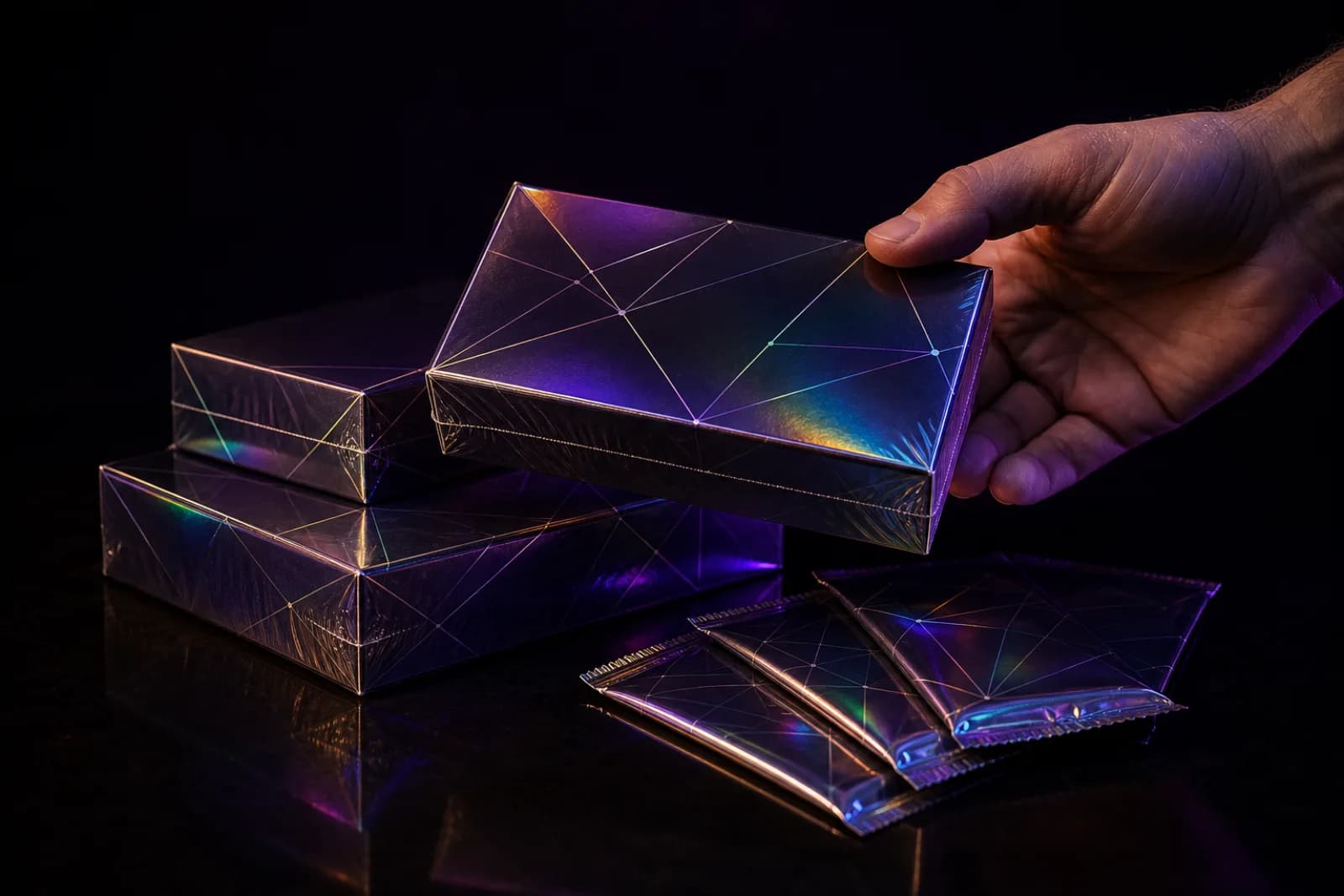
A booster box is a sealed carton with 36 packs from one set; an ETB adds gameplay accessories on top of 8-10 packs; a bundle is just 6 packs; and a tin is a metal box with 4-5 packs and a promo card. Financially, opening one is usually negative EV compared to buying the specific single you want directly - a sealed box from a set that's out of print is worth more as a long-term collectible.
What is a booster box, ETB, bundle, and tin
A booster box is a sealed carton with 36 packs from the same set - the cheapest per-pack way to buy a lot of sealed cards at once, with no accessories included. An ETB (Elite Trainer Box) holds fewer packs (8-10) but adds card sleeves, Energy cards, damage-counter dice, and usually a promo card - built for players, not just collectors. A bundle (Booster Bundle) is six packs only with no accessories, and a tinis a metal box with 4-5 packs and one or more promo cards, usually themed around a popular character from the set. There's also a "case" - several booster boxes together, usually 6 - but that's a product for shops and resellers, less relevant for an individual buyer.
| Product | What's inside | Israel price range* |
|---|---|---|
| Single pack | 10 game cards + 1 Energy card + 1 digital code | ₪35-45 |
| Booster box (36 packs) | 36 packs from the same set, no accessories | ₪650-1,000 |
| ETB | 8-10 packs + sleeves, Energy, dice, usually a promo | ₪200-450 |
| Bundle (6 packs) | 6 packs, no accessories | ₪100-250 |
| Tin | 4-5 packs + one or more promo cards | ₪90-220 |
* These ranges are intentionally wide: there's a real gap between the official distribution channel (like Nintendo Israel's own store) and hobby/pop-up shop prices, which can run well above it for the exact same product. Figures were gathered from a sample of Israeli shops and price lists, as of July 2026 - not overseas prices and not secondhand prices. Actual price depends on the set (new, in-demand sets cost more), the buying channel, and availability, so it's always worth comparing a few shops - including the official channel - before buying.
Is it worth opening a booster box
On average, opening a booster box is EV(expected value) negative compared to buying the singles you actually wanted - you pay for every weak card you didn't want, plus the gamble itself. Trading communities largely agree on this: you open a box for the experience, not as an investment plan - for the broader question of whether Pokémon cards are worth it as an investment at all, see our Pokémon card investing guide.
| Opening it | Keeping it sealed | |
|---|---|---|
| Average financial EV | Usually negative vs. buying singles | Depends on the set, not guaranteed |
| What you get | Experience, excitement, cards to play or deck-build | A potential long-hold collectible |
| Liquidity | Individual cards are relatively easy to sell | Depends on set demand; not always high in Israel |
| Best for | Those who want the thrill of opening or cards to play | Those comfortable with a calculated long-term bet |
How to check a box hasn't been opened: a reseal checklist

- Shrink-wrap seams - original shrink wrap is smooth and even, with one clear seam. Doubled-up plastic, tape marks, uneven creases, or heat-gun marks are a red flag.
- Official manufacturer seals- Pokémon boxes (The Pokémon Company) and One Piece boxes (Bandai) each come with manufacturer-specific logo placement and shrink-wrap design. A blurry logo, wrong font, or "generic" unprinted wrap isn't right.
- Inconsistent internal arrangement - if the seller is willing to open the box in front of you, the packs inside should all face the same direction in the same order. Upside-down or randomly arranged packs suggest the box was already opened and repacked.
- Suspicious weight (weighed packs)- a known trick is weighing every pack, identifying the heavy ones (which usually hold the rare, valuable cards), pulling them, and leaving only "light" packs in the box. Hard to verify as a buyer without opening it yourself - one more reason to buy from a trusted source instead of chasing the cheapest listing you find.
- Priced significantly below market- a box selling well under the range in the table above usually isn't a deal. It's the same red flag as in our fake-detection guide and our safe-trading guide: a price that's too low is usually the problem, not the opportunity.
- Real photos of the specific item - a legitimate seller will photograph their actual box, not use a stock image from the internet. Asking for an extra photo and getting refused is itself a red flag.
Buying safely secondhand and from abroad
Frequently asked questions
How many cards are in a booster box?
A standard modern English booster box has 36 packs. Each pack contains 10 game cards, one basic Energy card, and one digital code card for Pokémon TCG Live - so 360 game cards total, plus 36 Energy cards and 36 codes. Some sets also add one promo card for the whole box.
Is it worth opening a booster box?
Financially, usually not - opening a box is generally EV-negative compared to buying the specific singles you wanted, because you're also paying for every weak card you didn't want. You open a box for the experience and the gamble, not as an investment strategy. If you're after a specific card, it's almost always cheaper to buy it as a single.
What is an ETB?
An ETB (Elite Trainer Box) combines 8 to 10 packs with accessories - card sleeves, Energy cards, damage-counter dice, and usually a promo card - in a storage box. It costs more per pack than a booster box, but it's built for players who want gear, not just cards.
How do I check that a box hasn't been opened?
Check that the shrink wrap is even with no double seams or resealing marks, that the manufacturer's official seal is crisp with no blurring, and that there's no suspicious price gap versus the market. If the seller is willing, ask to see that the packs inside are all facing the same direction. Full checklist below.
Do sealed boxes go up in value?
Sometimes, but it's not a guaranteed formula. Sealed boxes of sets that go out of print and stay in demand tend to appreciate simply because they can't be manufactured anymore - like any supply-limited product. On the other hand, prices can also drop, and liquidity in the small Israeli market isn't always high. None of this is financial advice.
What's the difference between a booster box and a case?
A case bundles several booster boxes together (usually 6), packaged and sold as one unit. It's mainly a product for shops and resellers buying in bulk, and less relevant for an individual buyer - both because of the price and because it's harder to resell as a whole.
What's the difference between an ETB and a booster bundle?
A booster bundle contains six packs only, with no accessories - cheaper than an ETB and built for someone who wants a few extra packs without paying for sleeves and dice they already have. An ETB costs more but includes the basic playing gear plus more packs.